Grey furniture is easy to live with, but it can leave a room feeling flat or cold if the wall color doesn’t pull its weight. The fix isn’t complicated: pick a shade that adds warmth or interest without fighting the grey. Here’s a practical look at the living room paint colors that actually work with grey furniture, and why they hold up over time.
Why Grey Furniture Needs the Right Backdrop
Grey is a neutral, but it’s not a blank slate. Depending on its undertone — cool blue-grey, warm greige, or something in between — it reacts differently to the wall color around it. Put a cool-toned grey sofa against a stark white wall and the whole room can feel sterile. Pair that same sofa with a warmer wall tone, and suddenly the space feels intentional rather than accidental. The goal when choosing living room paint colors with grey furniture is balance: enough contrast to avoid a washed-out look, enough warmth to avoid a cold one.
Warm White
Warm white is the safest starting point for a reason. Unlike a cool, blue-based white, a warm white has a slight yellow or cream undertone that softens the overall feel of the room. This matters because grey furniture, especially in cooler shades, can tip a space toward feeling chilly or clinical. A warm white wall acts as a buffer, giving the grey something gentle to sit against instead of something stark. It also plays well with natural light, shifting subtly throughout the day without turning harsh.
Soft Greige
Greige — the blend of grey and beige — is one of the most versatile living room paint colors for rooms built around grey furniture. It bridges two tones that don’t always speak to each other naturally: cool grey upholstery and warmer elements like wood flooring, tan rugs, or wooden furniture pieces. Instead of forcing the room to pick a side between warm and cool, greige lets both coexist. This is particularly useful in living rooms where the furniture is grey but the floor is a warmer oak or walnut tone.
Where Greige Works Best
- Rooms with a mix of grey upholstery and wood furniture
- Spaces with warm-toned flooring, such as oak or pine
- Living rooms that need a transitional, not-too-committal wall color
Muted Sage Green
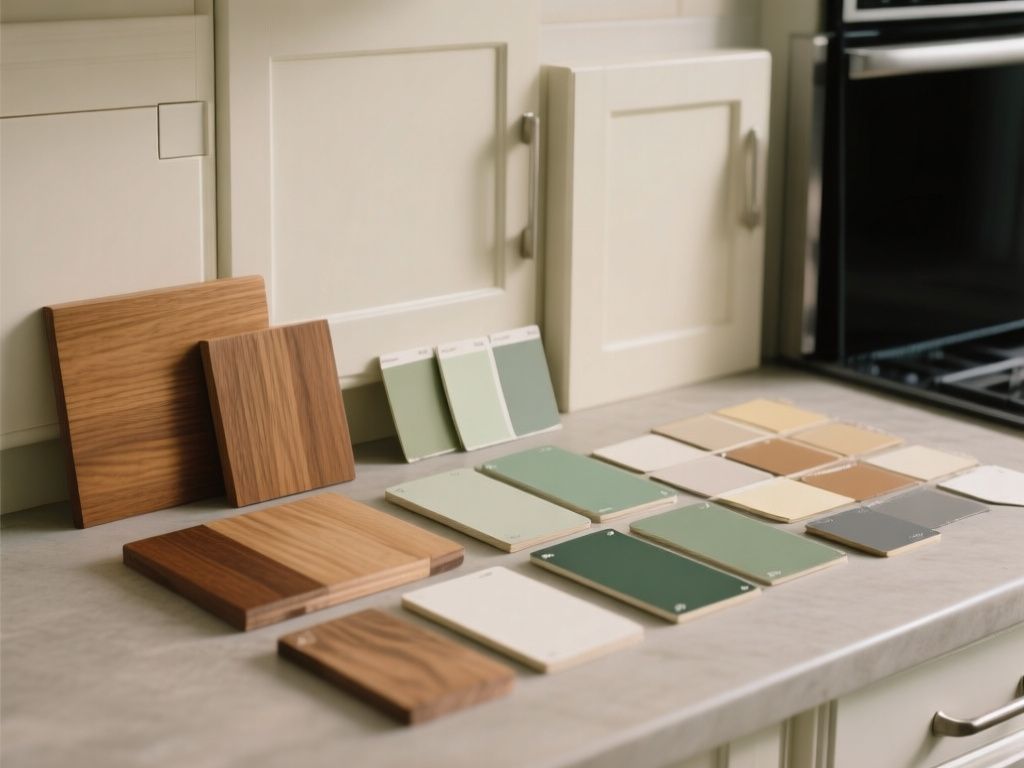
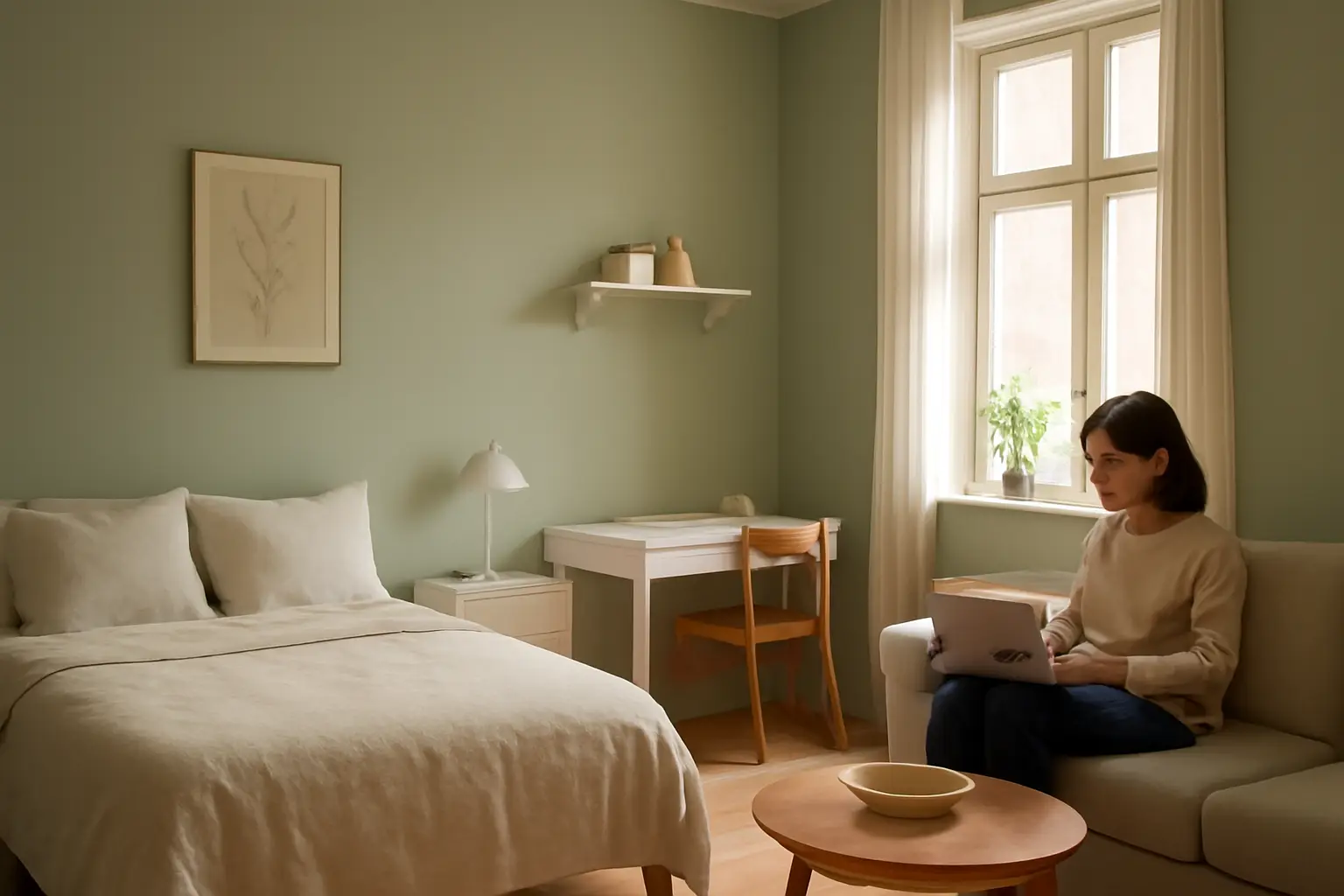
If the room feels too neutral, muted sage green is worth considering. It introduces color without disrupting the calm, understated mood that grey furniture tends to set. Sage sits close enough to grey on the color wheel that the two don’t clash, but it has just enough pigment to stop the room from reading as beige-on-beige. This works especially well in living rooms that get decent natural light, where the green can read as soft and organic rather than bold.
Pale Blue-Grey
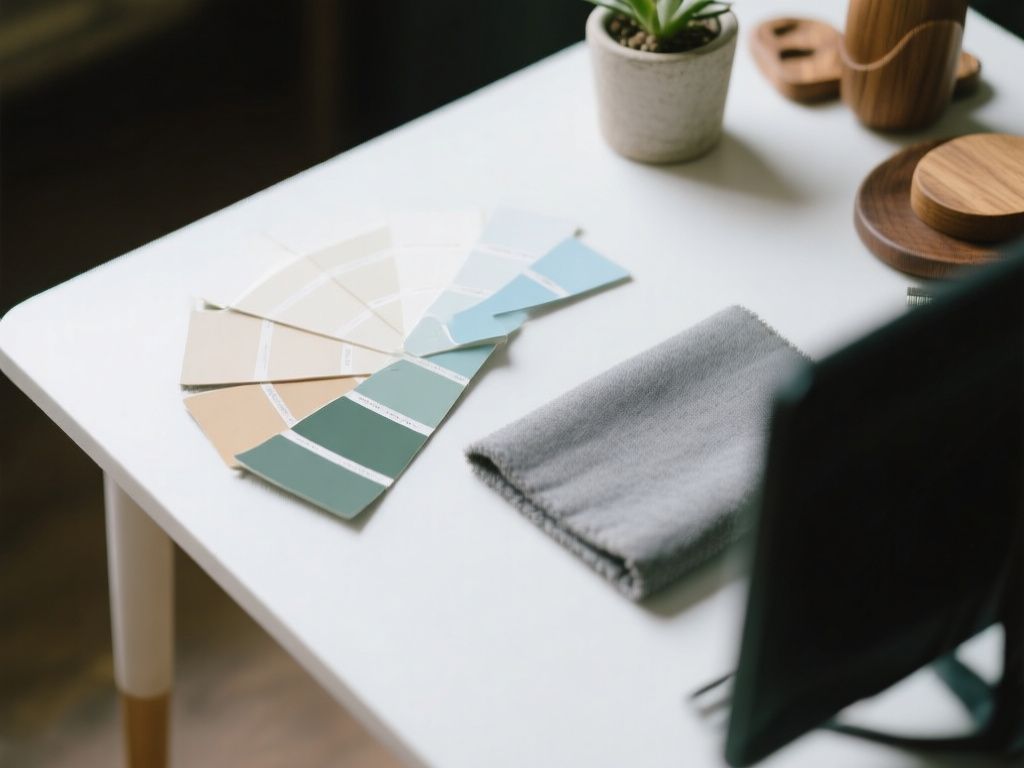
For a more tonal approach, pale blue-grey keeps things in the same family as the furniture itself while adding subtle depth. This shade coordinates particularly well with marble surfaces or light wood accents, making it a strong option for living rooms with a coffee table or side tables in those materials. The key is restraint — pale blue-grey walls next to grey furniture should feel like variations on a theme, not a mismatch of two different grey ideas.
How to Actually Test These Colors
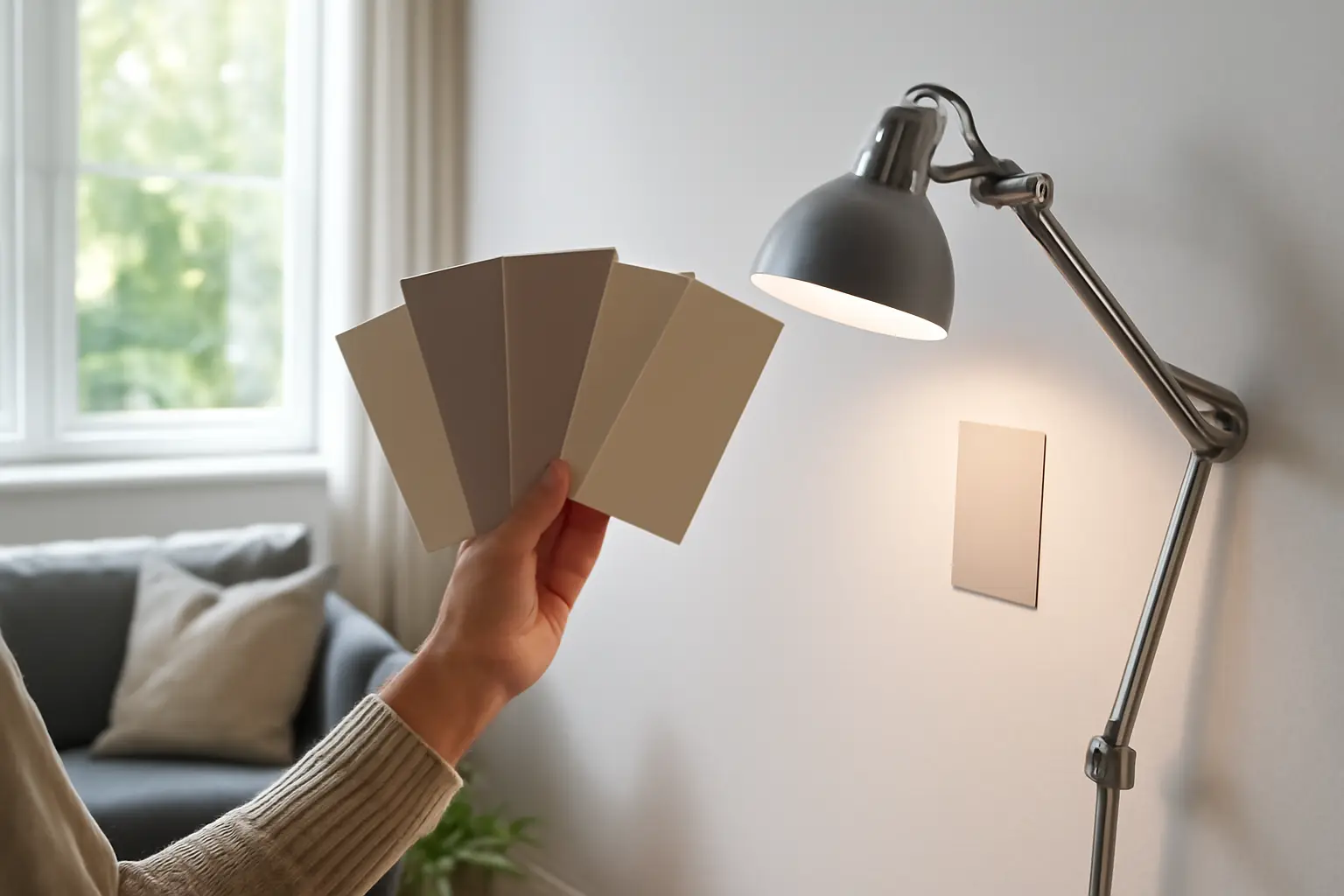
Paint swatches on a card never tell the full story. Lighting changes everything — a color that looks perfect under a showroom bulb can look completely different against your living room’s north-facing window or evening lamp light. Before committing to any of the living room paint colors above, paint two or three candidate shades directly onto several walls in the room, not just one patch near the door.
- Apply each test color to at least two different walls, ideally ones that get different light during the day
- Check how the color looks in the morning, midday, and evening
- Look at the color next to the actual grey furniture, not just on its own
- Give it at least a full day before deciding — first impressions under one lighting condition can be misleading
This step takes a bit more time upfront, but it avoids the common mistake of repainting a whole room because the color looked different than expected once the furniture was back in place.
Bringing It Together
There’s no single “correct” answer when it comes to living room paint colors with grey furniture — it depends on the furniture’s undertone, the flooring, and how much natural light the room gets. Warm white and soft greige are dependable choices for rooms that need warmth without much risk. Muted sage green works for anyone wanting a touch of color without abandoning a neutral palette. Pale blue-grey suits rooms with marble or light wood accents where a tonal, cohesive look is the priority.
Whichever direction feels right, test it properly before painting the whole room. A short trial on the wall saves a lot of second-guessing later.