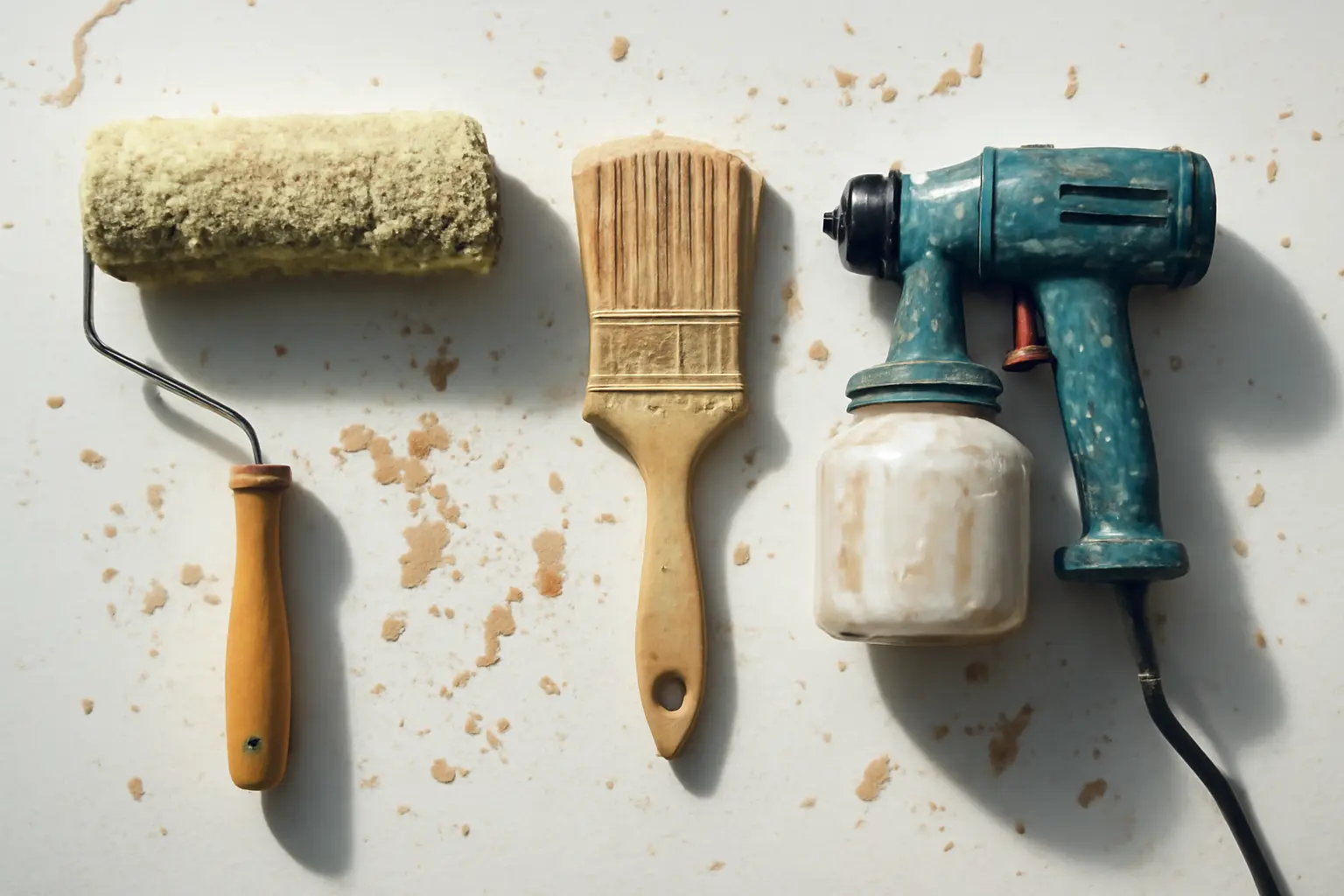
Every painting project comes down to the same question: sprayer, roller, or brush? Each tool has a job it does better than the others, and picking the wrong one usually means wasted paint, uneven coverage, or hours of extra work. Here’s how to match the tool to the task instead of guessing.
Paint Sprayer: Best for Speed and Scale
A paint sprayer earns its place when you’re covering large surfaces and want a smooth, even finish without visible strokes or lap marks. It outperforms a roller in raw speed, especially on big walls, fences, or whole-house exteriors, and it can produce a more uniform surface than either a roller or a brush.
Sprayers also shine on hard-to-reach places and complex profiles — spindled railings, textured surfaces, or intricate trim where a roller simply can’t get into the gaps. But that strength comes with trade-offs. Overspray means you’ll need more masking and prep work than with a roller or brush, and sprayers are generally more expensive to buy or rent. If the setup isn’t dialled in correctly, they can also waste a surprising amount of material.
A common mistake is assuming a sprayer is always the best choice simply because it’s the most powerful tool. For small rooms, quick touch-ups, or detailed trim work, a roller or brush is often faster to set up, easier to control, and leaves far less mess to clean up afterwards.
Paint Roller: The Practical Middle Ground
For most interior walls and ceilings, a roller is the tool that makes the most sense. It covers large flat areas faster than a brush and gives a noticeably more even coat, which is why it’s the standard recommendation for ordinary home repainting projects.
Mastering the art of painting: a step by step guide to using a paint roller starts with choosing the right nap for your surface — shorter naps for smooth drywall, longer ones for textured walls — and loading the roller evenly so it doesn’t drip or leave patches. Working in overlapping W or M patterns, then filling in without lifting the roller too soon, helps avoid the streaky lines that show up once the paint dries.
Rollers aren’t built for corners, edges, or detailed trim, though. That’s where a brush takes over.
Paint Brush: Control Over Speed
When precision matters more than covering ground quickly, nothing beats a brush. It’s the right tool for small areas, corners, window frames, and detailed work where a sprayer or roller would be clumsy or messy. On big flat surfaces, though, it’s the least efficient option of the three — slower and more tiring than either alternative.
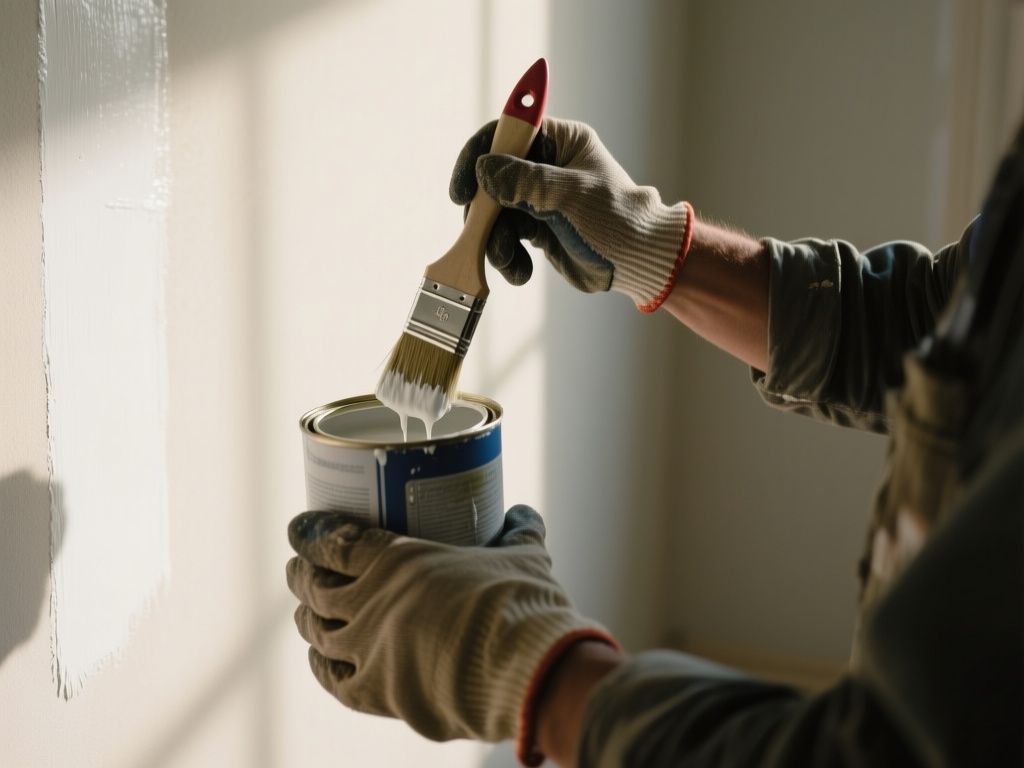
How to Use a Paint Brush effectively comes down to a few habits: dip only a third of the bristles into the paint to avoid drips, apply with light, even strokes, and cut in along edges before filling in the rest of the section. Holding the brush at a slight angle gives better control on tight corners and trim.
Looking after your brushes matters just as much as using them well. How to Clean Paint Brushes? The short answer: rinse thoroughly with water for water-based paints or the appropriate solvent for oil-based ones, work the bristles between your fingers to remove trapped paint, then reshape and let them dry flat rather than standing on their bristles.
Using All Three Together
You don’t have to pick just one tool for an entire project. A common approach is to use a brush for cutting in corners and edges, a roller for the main wall surfaces, and a sprayer for large exterior areas or detailed trim that would otherwise take hours to brush by hand. Combining them according to each tool’s strength usually gives a better result than forcing one tool to do a job it wasn’t designed for.
Quick Comparison
| Tool | Best For | Limitations |
|---|---|---|
| Sprayer | Large surfaces, complex profiles, hard-to-reach spots | More masking needed, higher cost, can waste paint if misconfigured |
| Roller | Walls and ceilings, general home repainting | Not suited for corners or fine detail |
| Brush | Edges, corners, trim, small areas | Slow and inefficient on large flat surfaces |
DIY vs. Hiring a Professional Painter
DIY vs. Hiring a Professional Painter: Which Option is Right for You? If your project is a single room with straightforward walls, a roller and brush combination is usually manageable on your own. But if you’re dealing with a whole house, high ceilings, or an exterior that calls for a sprayer, the equipment cost and learning curve might tip the balance towards hiring someone who already owns the gear and knows how to avoid overspray and uneven coverage.
Beyond the Basics
Unleash Your Creativity: Innovative Techniques for Interior Painting once you’ve settled on your tools. Rollers and brushes aren’t just for flat colour — texture rollers, sponge techniques, and combining a sprayer’s smooth base coat with hand-brushed accents can all add character to a room without needing specialist equipment.
Final Thoughts
There’s no single best tool — only the right one for the surface in front of you. Reach for a sprayer when scale and a flawless finish are the priority, a roller for the bulk of your walls and ceilings, and a brush wherever precision counts more than speed. Most real projects end up using all three at some point, and that’s exactly how they’re meant to be used.
Read also
- DIY vs. Hiring a Professional Painter: Which Option is Right for You?
- How to Clean Paint Brushes?
- How to Use a Paint Primer
- Choosing the Best Brands of Interior Paint
- How to Dispose of Paint the Right Way